2025 was a year of reset. At the start of the year, I felt stuck in a time loop, personally and professionally stagnant. After months of brooding and honest conversations with my spouse, Sneha, and a few close friends, I realised my mind was craving a more challenging environment. It’s a feeling that has been brewing for years, and this was the year I finally addressed it.
–
Socialisation and Seeking Mentorship
For the last 15 years, I focused so intensely on work that I neglected my social life. While my colleagues are great friends, my “heads down, sleeves rolled up” approach meant my social circle rarely expanded beyond a small group in Bangalore and that too thanks to Sathya.
I started my career because of that one famous TED talk (the one linked above) on multi-touch user interfaces by Jeff Han. The way he presented his experiments and solutions, the sheer awesomeness of simultaneous multiple inputs in user interfaces, it had such a profound effect on my young brain that it kickstarted a latent need to build things from scratch. I went deeper and found a group called NUIGroup, a forum with people from all over the world experimenting and finding ways to build multitouch hardware on their own. Learning from that group, I built a multitouch screen using a projector, camera, and infrared lasers. Simultaneously, I joined a group of people developing SDKs for building apps with multitouch UX. I was one of the core contributors to the PyMT project, which later evolved into Kivy.org. I learned so much being part of that group, thanks to some amazing people and mentors.
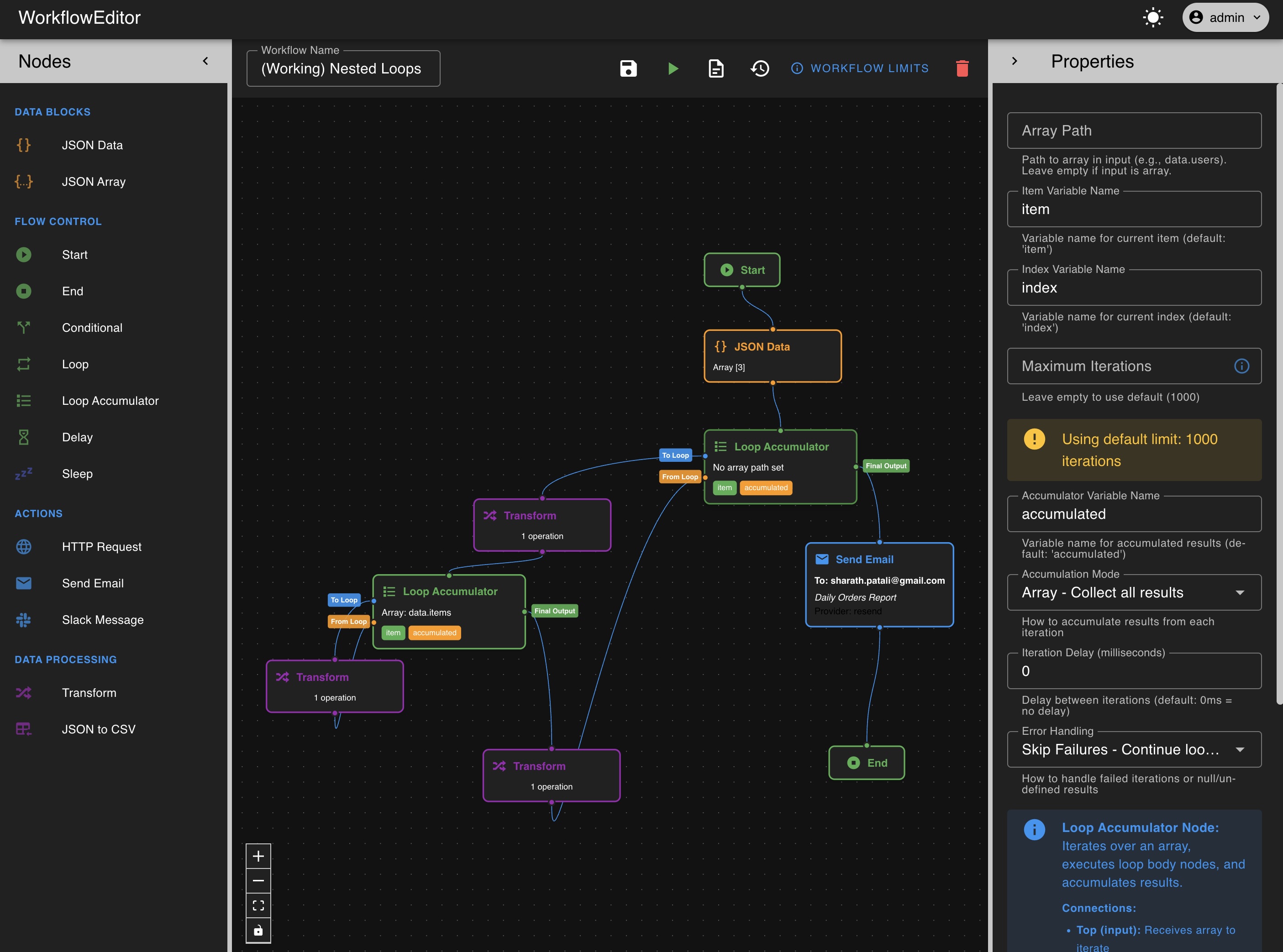
It’s been close to 4 weeks since I last wrote about Yantra. Within a week I wanted to wrap up the project, clean it up and then make the repo public. In a classic case of chasing the next interesting project to do, I got distracted with electronics and began 3 separate projects (Will write about it in the future). I was also apprehensive about sharing the code as I kept finding edge cases that I wanted to fix before release. It was an endless cycle of fixing and testing. So I finally had to take a call and release it in whatever state it is in.
NOTE: I asked Claude to help me distill this topic from my notes, and it did such a fine job that I hardly made any changes. I left this explanation in place because it's a succinct overview of Yantra's node execution process.
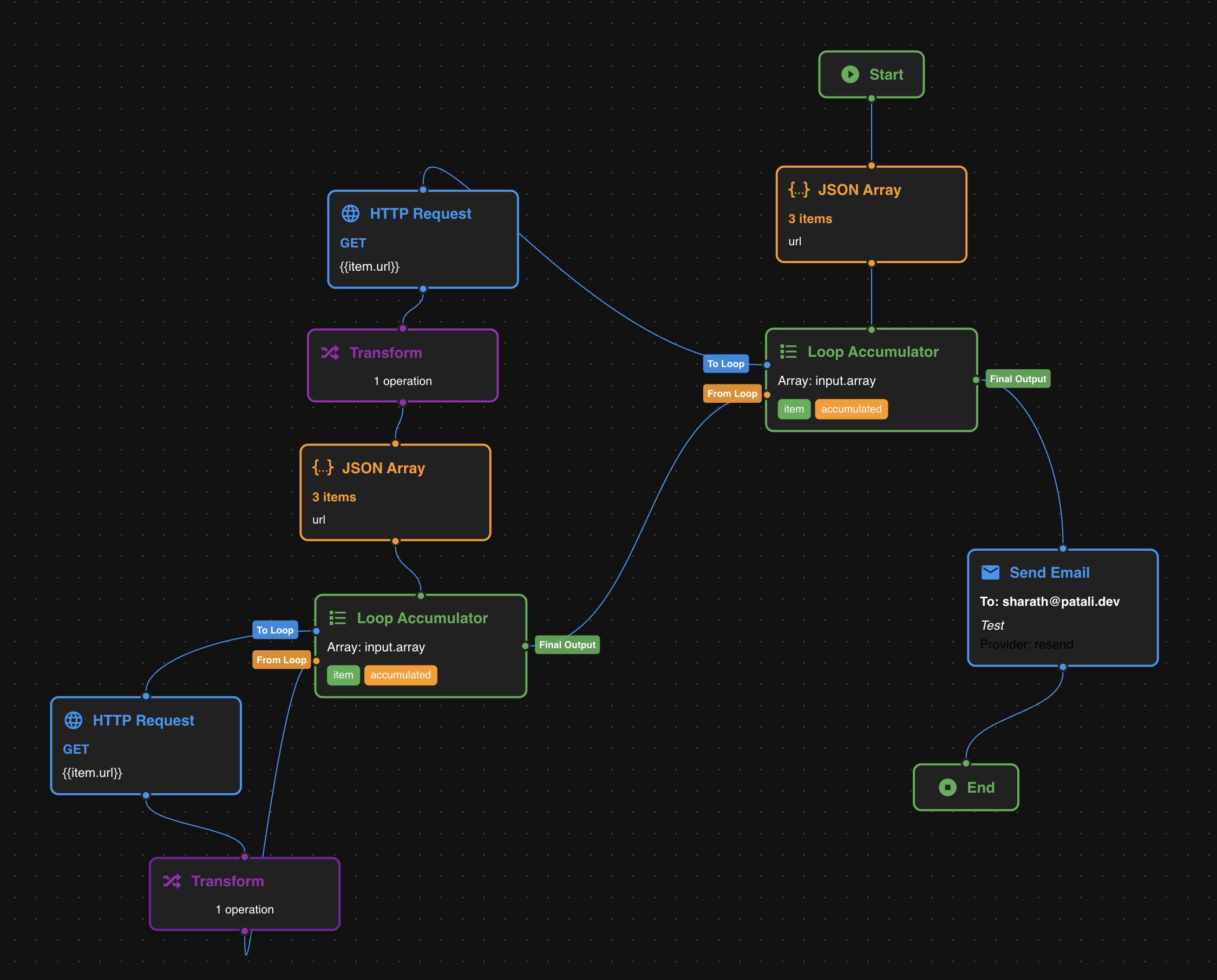
At its core, Yantra represents workflows as Directed Acyclic Graphs (DAGs). Let’s explore exactly what that means and why this design choice is crucial .
What Is a DAG?
Directed: Data flows in one direction (node A → node B)
Acyclic: No loops back to previous nodes (no infinite cycles)
Graph: Nodes (tasks) connected by edges (data flow)
Why Not Just a List?
Because real workflows aren’t linear. Consider a typical DevOps automation:
The Inspiration: From Cartoons to media processing libraries to Real Problems
Growing up, I was fascinated by Tom’s and Wile E. Coyote’s elaborate contraptions that set up impossibly complex chain reactions. The end result was usually Jerry or the Road Runner outwitting them, but it wasn’t the fault of the machine itself. I even attempted a few times to set up my own Rube Goldberg machine. I was thinking the other day that I find some DevOps tasks fun for exactly the same reason. The magic is how the chain comes together and ultimately produces some result. It’s fun to see the chain reaction in action.
To help with my work I recently installed Ubuntu 20.04 on my home computer. 20.04 is surprisingly snappy, crisp and stable on my home computer (Ryzen 7 1700, 32GB 3200Mhz DDR4, GTX 1080, NVME drives). However I hit upon an interesting problem with a USB WiFi dongle that I use TP-LINK Archer T4U v3, It did not work out of the box. So as expected I had to look at the self compiling of drivers route.
Recently I integrated Firebase’s Crashlytics solution into one of our main Android products. It’s fairly easy to integrate, just 4 steps as per Crashlytics’s documentation here. But as with any reporting system there involves the issue of privacy and data collection problem. Always important to inform the user if you are collecting any information and also request for their consent to do so. By default Crashlytics’s behavior is to start reporting on every crash. So instead if you want to setup an opt-in process then all you have to do is
End of 2019 my daily driver 2015 MacBook Pro was beginning to show signs of ageing. Especially when I’m running multiple IDE’s, terminal emulators and browsers running in the background. Also two monitors (Laptop’s built in and an external 1080p monitor) was just not enough. I had to constantly switch between IDE and system monitoring and IRC/Slack clients. But driving more than two monitors would be next to impossible on it. However the processor inside is pretty decent for my current requirement of Android and web development. To solve this dilemma of to upgrade or not upgrade I decided to make a pros and cons list